
Why We Are Writing This
Kink-Y was born in 2022.
At the beginning, the idea was simple: to organize a few parties every now and then, with consent held to the highest possible standard, together with hygiene, inclusivity, careful selection, and a strong focus on people bringing good energy into the room.
We wanted to create parties where people could feel free, but also respected. Playful, but also safe. Sexy, but also warm. Open, but not careless.
Over time, we understood something important.
People did not only want fun.
They wanted connection.
They wanted to meet again. They wanted to recognize faces. They wanted to build trust. They wanted to feel part of something that did not disappear when the party ended.
So Kink-Y slowly changed direction.
The munches were introduced. Telegram became more structured. A small bot started helping the experience become smoother and more playful. Later, Nixie was born, adding new ways to connect, verify, organize, communicate, and make the community safer and more fun.
Kink-Y gradually became something bigger than a party project.
It became a community.
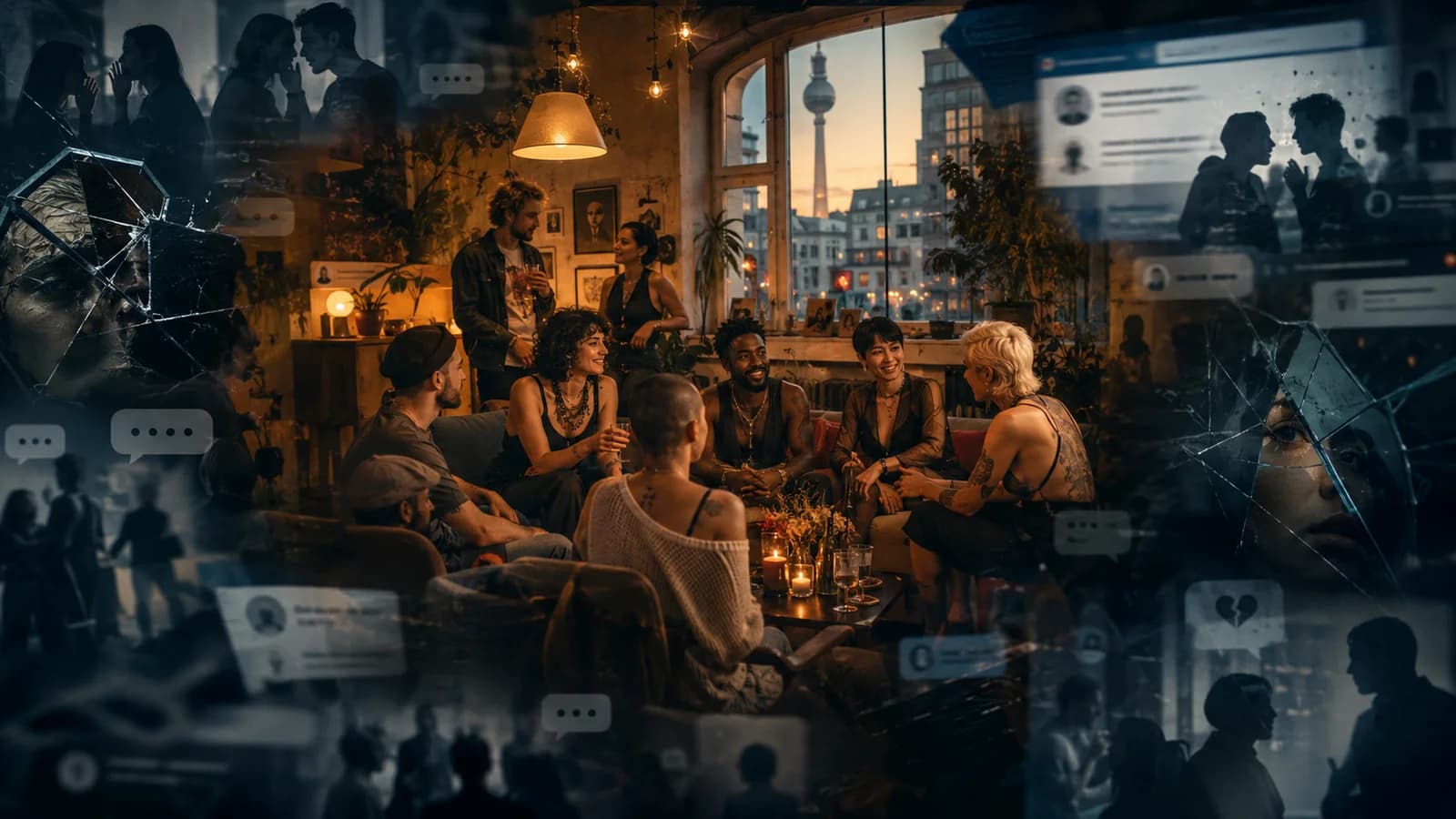
Over time, as the community grew and became more visible, we also became more exposed.
Recently, we have seen a number of claims, comments, and hostile interpretations about Kink-Y circulating online. Some are based on misunderstandings. Some come from people who had negative feelings about moderation decisions. Some are distorted versions of real situations. Some are simply false.
We are writing this article mostly for people who do not know us well and may encounter those claims before they ever enter the community.
This is not an article against criticism.
Criticism is welcome.
Questions are welcome.
Disagreement is part of every living community.
But there is a difference between criticism and false claims. There is a difference between accountability and public distortion. There is a difference between saying “I disagree with how something was handled” and turning a situation into a weapon against an entire community.
A Visible Community Is More Exposed Than a Party Brand
A community like Kink-Y is different from a club night or a party organizer who appears once a month, opens the door, runs the event, and disappears until the next date.
Kink-Y is present every day.
We are in Telegram discussions. We moderate. We answer questions. We handle reports. We organize munches. We build tools. We write resources. We create events. We develop Nixie app. We verify profiles. We receive feedback. We make mistakes. We correct things. We talk to people directly.
This creates trust, because people know who is behind the project.
But it also creates exposure.
When a community is personal, visible, and active every day, disagreement can also become personal. A moderation decision can become a conflict. A ban can become a story. A rule can become a political argument. A private frustration can become a public narrative.
This is especially true because we are not only founders or organizers from the outside. We are part of the community too. We attend, we talk, we host, we connect, we build relationships, and sometimes we are personally involved in the same social fabric we are also responsible for managing.
That makes the project more human.
It also makes it more vulnerable.
Visibility creates accountability.
But it also makes you easier to attack.
What Happened
From 2022 until recently, Kink-Y did not experience this kind of hostility.
Of course, not everyone liked everything. That is normal. Some people joined and left. Some disagreed with rules. Some preferred other spaces. Some did not feel aligned with the community. This happens in every group.
But the level of targeted negativity changed after a period of tension around moderation, politics, discrimination, and the direction of the Telegram group.
For a long time, we tried to handle difficult behaviour with patience. Sometimes probably too much patience. We tolerated repeated tension, provocative comments, lack of tact, rule-breaking, political flame wars, and people who seemed more interested in creating bad feelings than in contributing to the community.
Eventually, a specific moderation situation became the spark for a much bigger conflict.
The short version is this: we enforced our anti-discrimination rules in a way that some people strongly disagreed with. For us, the principle was clear. Kink-Y does not accept discriminatory language or identity-based hostility, regardless of who it is aimed at.
We understand that power dynamics exist.
We understand that gender, queerness, patriarchy, racism, privilege, and social history are real topics.
But our community rule is still simple:
No identity group should be dismissed, attacked, or treated as unwanted.
- This applies to women.
- It applies to queer people.
- It applies to trans and non-binary people.
- It applies to men.
- It applies to cis people.
- It applies to everyone.
Some people disagreed with this approach. Some felt that certain statements should be interpreted politically rather than treated as discriminatory. We did not agree.
From there, the situation escalated.
Some people left. Some were banned. Some moderation decisions were made very firmly. In that specific moment, some bans happened without the level of explanation we would usually prefer to give, because we felt the group had reached a breaking point and needed a clear cut.
Some newer members entered the situation without context and amplified posts that, from our perspective, were disrupting the group rather than helping it. Some people reacted to the conflict in ways that made it clear to us that the alignment with Kink-Y values was no longer there.
In that chaos, not everyone understood why they were removed. What may have looked to some like a normal conversation felt to us like a very serious situation that needed to be addressed once and for all.
We understand that this could have looked harsh from the outside.
We understand that this may have created a very specific impression for some people.
But those actions did not come from nowhere. There was a reason behind them, and a long history leading up to that moment.
It was a very particular moment in more than four years of community history. It came after accumulated stress, repeated moderation issues, and a growing feeling that the group was being pulled away from its original purpose.
Can someone judge the whole community, the whole project, and years of work from one decontextualized episode?
We do not think so.
That does not mean every decision was perfect. Some things could have been handled better. We are human, and that moment triggered anger and frustration in one of the worst possible ways.
But context matters.
The reason behind those decisions was not revenge, ego, or a desire to silence criticism.
It was the need to protect the direction of the community and remove patterns that, in our view, were repeatedly disrupting the experience for everyone else.
It is not pleasant to say, but after those removals the atmosphere in the group changed noticeably. Since then, we have not experienced the same level of flames, tension, and bad feelings. Of course, this does not mean conflict can never happen again. Every community will have difficult moments. But we cannot ignore that the group became significantly more enjoyable, calmer, and easier to participate in.
We do not have hard feelings toward those people. Many of them are nice people, and in some cases we also had positive experiences with them in person. But as organizers and moderators, we have the responsibility to protect the majority of the members and the general health of the community.
Sometimes people can be good people and still be disruptive in a specific community context. That was the difficult conclusion we reached.
At some point, a community has to decide what it is, what it is not, and which kind of energy it allows to shape the room.
Our Position on Politics and Discrimination
Kink-Y is a sex-positive community.
It is not a political debate group.
This does not mean people should not care about politics. Many of us do. Politics affects bodies, rights, safety, gender, sexuality, migration, war, freedom, and many other aspects of life.
But our Telegram group was not built to become a battlefield for political arguments.
This is not about avoiding difficult realities.
It is about protecting the purpose of the space.
Kink-Y exists to help people connect, explore, learn, flirt, dance, play, talk, create, and find community around sexuality, consent, kink, body freedom, and alternative relationships.
We also believe inclusion cannot be selective.
A community cannot say “no discrimination” and then accept discrimination when it is aimed at a group someone personally dislikes. Our rule is not perfect, and no rule can solve every cultural tension. But the principle is important.
No group should be dehumanized.
No group should be reduced to a slogan.
No group should be told they are not needed.
That is not the culture we want to build.
Criticism Is Welcome. False Claims Are Not.
We want to be very clear about this.
People are allowed to dislike Kink-Y.
People are allowed to disagree with our moderation.
People are allowed to prefer other communities, other parties, other organizers, or other rules.
People are allowed to say, “This space is not for me.”
That is completely fine.
What is not fine is spreading false claims, distorting situations, attacking people personally, or using incomplete stories to damage the reputation of a whole community.
We have seen this happen more than once.
And it is particularly damaging a sex-positive community, where trust, safety, consent, and reputation matter enormously.
When a Situation Is Weaponized
One example may help explain the pattern.
At one of our munches, a boundary was crossed during a playful conversation. The person responsible was contacted. The issue was explained. A temporary stop from the community was applied. The person affected was involved in the handling of the situation, and the decision was made with care.
Later, this situation was used online to accuse us of not taking women seriously, not respecting boundaries, or protecting men because of personal friendships.
That was false.
The person whose boundary was crossed eventually stepped into the FetLife discussion and asked people to stop distorting and weaponizing her story. She clarified that the situation had been handled and that others were using it for their own purposes.
This is exactly the kind of dynamic that creates damage.
A real situation becomes a symbol.
The affected person’s actual experience becomes secondary.
The story becomes useful to people who already want to attack the community.
And once that happens, facts often matter less than emotion.
This is one of the reasons we believe public discussions about sensitive situations need care. Accountability matters. Reports matter. Criticism matters. But using someone else’s experience as ammunition without respecting their own voice is not care.
It is exploitation.
Recurring Claims and Our Answers
Over time, we have seen a few recurring claims about Kink-Y. Here is our position on them.
“Kink-Y uses AI.”
Yes.
We use AI.
Openly.
A lot.
Kink-Y is run by a small team. Without AI, we would not be able to maintain a large website, publish articles and resources, create posts for different platforms, generate images for parties and blog articles, manage translations and grammar, build internal tools, maintain bots, and develop projects like Nixie.
The ideas, values, opinions, direction, and decisions come from us.
AI helps us shape, polish, produce, organize, and move faster.
This article itself, like many of our texts, has been shaped with AI support. The thoughts behind it are ours. The tool helps with structure, clarity, grammar, and speed.
We understand that some people dislike AI or feel uneasy about it. We also have concerns and questions about the future of AI. We do not see it as magic, and we are not blind fans of everything connected to it.
But we also live in the world as it is.
For a small team managing a large community, AI is a essential tool that allows us to create resources that would otherwise not exist.
Using AI does not make the work fake.
It makes the work possible.
At this point, most of the companies, organizations, creators, and independent projects use AI in some form. It is unavoidable, unfortunately.
“Kink-Y is authoritarian.”
Leadership is not the same as domination.
Kink-Y has always been shaped by community feedback. Many rules, Telegram topics, Nixie features, event ideas, and improvements came directly from members. We listen a lot. We adapt a lot. We change things when feedback makes sense.
At the same time, not everything can be decided by endless public debate.
Some principles are non-negotiable.
- Consent matters.
- No discrimination matters.
- No harassment matters.
- No political flame wars matters.
- No repeated hostile behaviour matters.
- Community safety matters.
Most of the time, we enforce these rules gently. That is our preferred way.
But there are moments where moderation needs to be firm. When that happens, people who disagree with the decision may experience firmness as authoritarianism.
We understand that.
But a community without moderation is not automatically freer.
Sometimes it is just less safe for the people who do not want to fight all day.
“The Kink-Y munch is not respectful or welcoming.”
The best answer to this claim is simple:
Talk to people.
Observe the atmosphere directly.
Our munch is one of the most important doors into Kink-Y. It is where newcomers meet regular members, where people ask questions, where friendships start, where collaborations happen, and where many people first experience the human side of the community.
No space is perfect.
Across years of munches, we have had a few incidents, maybe 2 minors situations. When something happened, we handled it directly and firmly.
But the low rate of incident and the atmosphere of our munch is something we are really proud of. It is friendly, social, inclusive, and very welcoming to newcomers.
You do not need to believe an online claim.
You can come and experience it yourself.
“Kink-Y is only about making money now.”
This claim could not be more far from reality.
The Telegram group is free.
The munch is free.
Most of Nixie is free.
Our bots are free to use.
Many of the tools, resources, meme storage and downloads, features, and community services we provide are free.
Our parties are usually among the more accessible ones in Berlin’s sex-positive scene. Some are very affordable. Some cost more because they include food, drinks, special formats, or expensive locations. But parties are not only a business product for us. They are one of the ways we keep the community alive through shared experiences.
As stated on our website, we also try to make sure that economic circumstances do not automatically exclude people from participating. For us, inclusivity also includes financial accessibility.
We believe that connections and sexuality should never depend only on someone’s financial situation. If someone is going through a difficult financial period, changing jobs, studying, or simply facing a tough moment, they are welcome to contact us privately. When possible, we try to find a solution together, whether that means a discounted or free entrance to our events for a period of time.
We do sell the Kink-Y Pass.
The Pass is offered at a much lower price than most dating apps on the market, while including Nixie Plus, with additional features and higher usage limits, as well as discounts with partners and other perks across the broader Kink-Y ecosystem.
More importantly, the Pass is a way to support the community and help us keep its core activities free and accessible to everyone, including Telegram moderation and bots, munches, Nixie profiles, and the other spaces and tools we maintain.
Parties are slightly different, as they come with real costs for venues, staff, equipment, and production. However, we don’t want financial circumstances to become a barrier. People in a difficult financial situation can always contact us, and we’ll do our best to make the benefits connected to the Pass accessible to them as well.
We normally have real expenses.
Software costs money. Hosting costs money. IT infrastructure costs money. Storage and bandwidth cost money. Development takes time. Events require equipment, repairs, cleaning, supplies, food, drinks, furniture, space, and constant organization.
We also have a VAT number. We pay taxes. We pay consultants. We spend a huge amount of time on bureaucracy, accounting, planning, communication, and administration.
When we organize events, we often pay locations in advance. If a party gets cancelled, the cost does not always disappear. Sometimes the venue still needs to be paid. The financial risk is real, even when people only see the ticket price.
Even when something is hosted privately, the cost does not disappear. It often becomes more personal.
We have invested years of time, money, energy, and unpaid work into this project. We have also given up private moments, vacations, hobbies, and a lot of free time to keep building it.
We hope one day Kink-Y can cover all its costs properly and become sustainable. If it eventually creates profit, we do not think that would make it less authentic.
Community work does not become less real because it also needs to survive financially.
Most clubs, workshops, retreats, temple nights, parties, and community projects need money to continue. Kink-Y is no different.
Passion can start a project.
Sustainability keeps it alive.
“Kink-Y bans people for no reason.”
We do not ban people because they disagree with us.
We do not ban people because they criticize us.
We do not ban people because they dislike an event or prefer another community.
People may be removed for repeated rule violations, harassment, discrimination, fake profiles, unsafe behaviour, hostile participation, boundary issues, or actions that damage the atmosphere of the group.
Sometimes bans are transparent. Sometimes we explain them publicly in the appropriate Telegram topic. Sometimes we cannot share every detail because privacy matters, especially when reports or sensitive situations are involved.
This can create frustration. We understand that.
But not every moderation decision can be turned into a public trial.
We try to balance transparency, privacy, safety, and fairness. It is not always easy, and we do not claim to be perfect.
But the goal is always to protect the community, not to punish people for ego.
Why This Happens More to Communities
A club can be criticized after a bad night.
A party organizer can be criticized after an event.
But a community is different.
A community creates repeated interactions. It has history. It has memory. It has relationships, conflicts, expectations, disappointments, rules, moderation, and emotional investment.
This makes it beautiful.
It also makes it vulnerable.
If the group has 3,700 members today, it probably means many more people have passed through it over the years. Some stayed. Some left. Some felt deeply connected. Some felt disappointed. Some had beautiful experiences. Some had conflicts. Some are former friends, collaborators, partners, or lovers. Some may also be moved by personal feelings, unresolved tensions, or stories that are no longer only about the community itself.
There are also situations that would probably never happen in the same way with a club or a more distant party organizer.
For example, there was once a serious concern raised about a person who had joined our group and subscribed to an event. Instead of ignoring it, we contacted that person directly, started a conversation, and tried to understand the situation carefully. Since we could not verify the full story immediately, we decided not to accept that person for the event while we gathered more information, but we did not instantly turn the matter into a ban from the group
Another member, who was active in the chat but not very present at events, contacted us privately with a very aggressive tone, demanding to know why that person had not been banned immediately.
The exchange escalated badly. We reacted firmly, and that person was removed from the group.
This is a typical example of how personal and exposed community management can become. People expect immediate answers, direct access, emotional availability, and perfect decisions in situations where information is incomplete and the responsibility is delicate.
A club may never answer that message. A party organizer may never explain anything. A large institution may hide behind a contact form.
We are reachable, and that is part of what makes Kink-Y human.
But reachability also creates friction.
This is not unusual.
A community is personal.
And Kink-Y is personal for us too.
We are part of it as members before being founders.
But in a community that is so personal and visible, a small number of angry people can sometimes create a lot of noise.
Ten or twenty hostile voices may seem loud online, especially if they repeat the same claims in different places. But they do not represent thousands of members, hundreds of active participants, years of munches, countless conversations, and the many people who have found friendship, intimacy, confidence, creativity, and belonging through Kink-Y.
This does not mean criticism should be ignored.
It means noise should not be mistaken for truth.
How to Know Us Directly
If you are curious about Kink-Y but feel unsure because of something you read online, the best thing you can do is simple:
Come closer and observe directly.
- Join the Telegram group.
- Read the rules.
- Check the topics.
- Look at how people talk to each other.
- Read the testimonials.
- Explore the website.
- Look at our consent resources.
- Try Nixie.
- Come to a munch.
- Talk to people.
- Ask questions.
- Meet us in person.
The direct experience of a community is usually more accurate than a hostile thread written by people who may not know the full story, may no longer be part of the community, or may have personal reasons to frame everything negatively.
We are not asking anyone to believe us blindly.
We are asking people to look carefully.
A Note to the Community
This article is also for people who are already part of Kink-Y.
We know that most people prefer not to get involved in online conflict. We understand that completely. Many people join Kink-Y to connect, relax, flirt, dance, talk, explore, learn, and have fun. Not everyone wants to answer hostile comments online.
At the same time, false narratives do not only affect us as founders or organizers.
They affect the whole community.
When someone says that Kink-Y is unsafe, disrespectful, fake, exploitative, or full of problematic people, they are not only attacking us. They are also indirectly attacking the judgment and experiences of the many people who are part of this space, contribute to it, enjoy it, and help make it what it is.
So if you see claims that do not reflect your experience, you are welcome to speak calmly and honestly.
Not to attack anyone.
Not to start fights.
Not to create drama.
But simply to say:
“This is not my experience.”
Sometimes that matters.
Silence can be elegant, but if only hostile voices speak, people who do not know the community may assume that hostility is the whole story.
It is not.
What We Will Not Do
We do not want to turn this into a public fight.
Our time is better spent building.
- More events.
- More resources.
- More Nixie features.
- More collaborations.
- More tools.
- More safer ways for people to connect.
- More spaces where people can explore with care and freedom.
We will not use this article to attack individuals.
We will not publish names, accounts, or links (not yet, at least)
We will not invite people to harass anyone.
We will not turn every false claim into a public battle.
If something crosses legal or safety lines, we will handle it through the appropriate channels.
But our main focus remains the community.
Final Thoughts
Kink-Y is not perfect.
No community is.
We have made mistakes. We will probably make more. We are human, and we are working in a field where emotions, sexuality, identity, rejection, desire, boundaries, and belonging are all very close to the surface.
But we care deeply.
- We care about consent.
- We care about inclusion.
- We care about boundaries.
- We care about freedom.
- We care about playfulness.
- We care about the way people are treated.
- We care about warmth, friendliness, kindness, and making people feel welcome.
We strongly dislike arrogance, coldness, superiority, and the habit of talking to people from a higher step. These are things we experienced often at the beginning of our journey in Berlin’s sex-positive scene, where some established people struggled to even say hi or pretended not to recognize newcomers.
Delivering a friendly experience and being reachable through peer-to-peer conversation was one of the reasons why we started Kink-Y. Being described as the opposite of that is difficult to read, because it is so far from what we have tried to build.
We care about creating spaces where people can feel less alone and more able to explore who they are.
Feedback can help a community grow.
False claims cannot.
If you want to understand Kink-Y, do not stop at the loudest thread.
Come closer.
Read.
Ask.
Meet people.
Experience the atmosphere directly.
A community is not built by rumours.
It is built by people.